

The construction sector in Mallorca remains a key topic for investors, companies, residents, and potential property buyers in 2026. In addition to the general growth of recent years, regional differences, changes in building types, rising construction costs, and significantly higher housing prices are shaping the current situation.
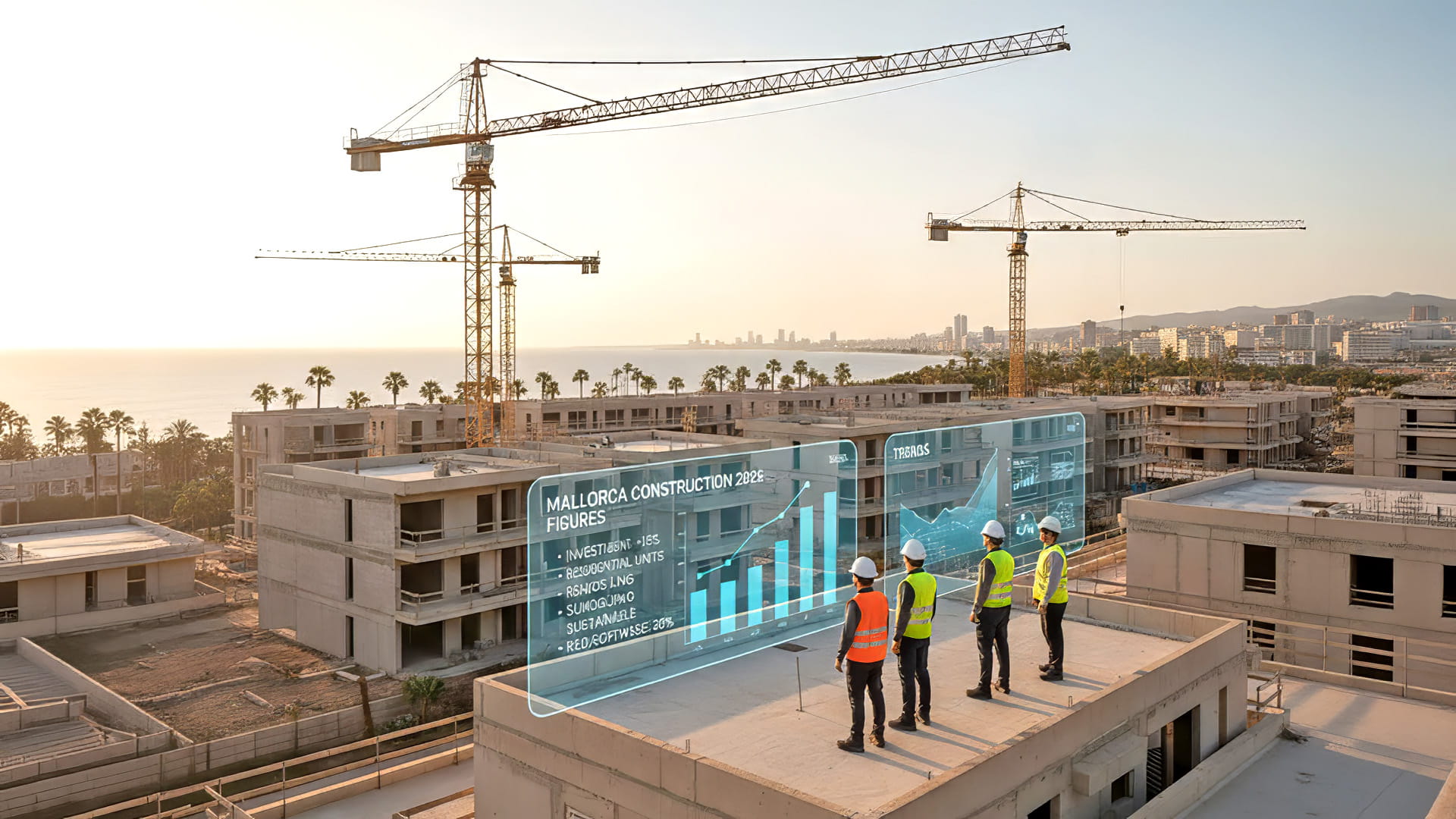
The construction industry in the Balearic Islands experienced strong growth in 2025. In the first half of the year, around 4,300 new construction projects were approved—the highest number since 2008. Of these, approximately 1,980 were single-family homes and 2,320 were multi-family residential buildings. In Mallorca alone, nearly 48% of the projects were single-family homes.
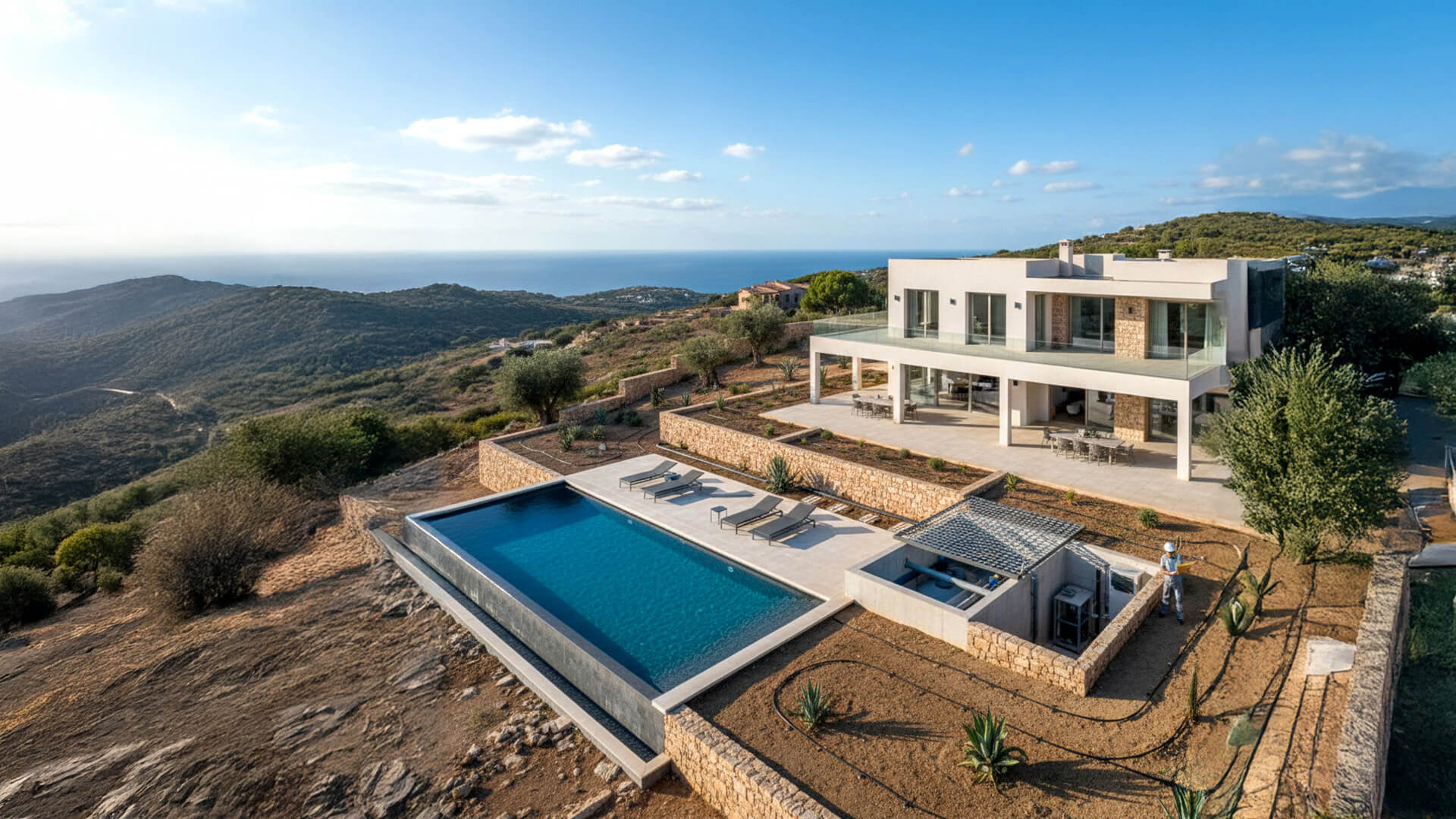
In rural areas, single-family homes and villas dominate, while urban areas focus primarily on multi-family housing. Many of these urban developments are positioned in the luxury segment.
New-Build Hotspots:
One of the main challenges in 2026 is the high and continuously rising cost of building materials and land. Strong demand meets a limited supply of building plots, causing land prices in prime locations to account for a significant share of total construction costs.
At the same time, higher prices for materials such as concrete, steel, and insulation, as well as logistical bottlenecks, further increase project costs. Although no precise figures are available specifically for Mallorca, construction costs in Spain and internationally have risen by around 10% in recent years—affecting the island as well.
Despite the increase in building permits, the sector faces a structural problem: a shortage of skilled labor. Estimates by Balearic construction associations suggest a shortfall of around 6,000 workers in both skilled trades and construction management.
Many municipalities are struggling to process building permits efficiently. The high number of applications leads to longer processing times, project delays, and additional bureaucratic effort—another structural obstacle for the industry.
Property prices in Mallorca are very high and continue to rise steadily.
New apartments and houses are often significantly more expensive than existing properties—by up to 30–40%, depending on location and property type.
In areas such as Calvià, prices have risen by more than 50% over four years, indicating strong regional market dynamics.
In addition to residential construction, public projects are also stimulating the sector. Major infrastructure initiatives are planned or underway in Mallorca, including the expansion of Palma Airport, a new hospital in Felanitx, and the extension of a school in Llucmajor. By September 2025, public investments totaling approximately €442 million were planned—around 24% more than the previous year.
Local authorities have also announced further major projects. For example, the municipality of Calvià plans to begin extensive redevelopment works in Magaluf in November 2026, with investments amounting to several million euros.Rising public investment in construction and infrastructure is a key driver of Mallorca’s economic development.
Investments in schools, healthcare facilities, transport infrastructure, and public spaces enhance the island’s attractiveness for tourists, residents, and potential newcomers.